
How to Find Weber County Residents
Match the search route to the clue in hand. An address points first to the Weber County Parcel Search and GIS map. A historical name belongs in the Polk directory collection, newspaper archive, cemetery register, or State Archives index. A court question belongs in Utah Xchange, while a birth, death, marriage, or divorce question follows Utah Vital Records rules. No single roll lists every person in the county, and a public owner record does not establish who sleeps at an address.
Use a short, repeatable trail. Save the source name, date checked, spelling used, and the result’s limits. A name match becomes stronger when an address, spouse, business, parcel, court location, or event year agrees in a second record. When the online view ends, ask the office that keeps the record rather than broadening a personal-data search.
- Search Weber County Parcel Search by address, owner last name, or parcel number, then note the land serial number and legal description.
- Use Utah’s voter search only for the registrant’s own registration and polling information; public file rules are separate.
- Check Utah Xchange for a public case lead, narrowing by court, case type, date, or wildcard when a name is common.
- For an older household, compare Weber Polk directories, newspapers, cemetery records, and Archives indexes.
- Request a copy or inspection from the named custodian under GRAMA, court procedures, or vital-record eligibility rules.
Note: A current directory lead is best treated as a dated clue until the record custodian confirms its status.
Weber County Resident Records Offices
Weber County keeps different pieces of a resident trail in different offices. The Recorder/Surveyor handles deeds, liens, plats, legal descriptions, tax maps, and abstracts. The Assessor maintains valuation and parcel characteristics. GIS supplies map layers and parcel geometry. The Clerk/Auditor holds Weber marriage licenses and election administration. Courts, Vital Records, the Sheriff, libraries, and Archives take over when the question is a case, event, historical household, or official request.
Weber County Recorder / Surveyor
2380 Washington Blvd Suite 370
Ogden, UT 84401
801-399-8441
Weber County Assessor
2380 Washington Blvd Suite 380
Ogden, UT 84401
801-399-8572
Utah Elections and Weber Clerk/Auditor
2380 Washington Blvd Suite 320
Ogden, UT 84401
801-399-8400
For a street-by-street address chain, the county parcel and GIS steps are collected on the Weber County street directory page. The office card above is the orientation point: ask the Recorder for an instrument or copy, the Assessor for a parcel lead, and Elections for the current rules that govern voter data.
Weber Parcel Search by Address
The county property page presents three separate search cards. Parcel Number accepts a partial value or the nine-digit book/page/parcel pattern shown in the example 100130001. Owner search works best with a last name, but the county warns that a trust or spouse may be the indexed owner. Address search can start with a house number, or use a complete USPS-style street value such as an abbreviated avenue or street.
| Parcel Number | Optional text; partial values accepted; the county example is 100130001. |
|---|---|
| Owner | Last-name search recommended; trust and spouse indexing can change the result. |
| Address | House number alone is allowed as a lead; full searches use USPS-style abbreviations. |
| Source systems | Data is extracted from the Assessor, Recorder, and Treasurer. |
The page displayed a maintenance notice during research, so availability and result-card fields need a live check. When it responds, carry the parcel or land-serial number into GIS and the Recorder index. The parcel display is a locator and tax lead, not a title opinion.
Open the Weber Parcel Search to check the current service state before relying on a result.
Utah Voter Records, Carefully Used
Utah’s voter search has fields for first name, last name, date of birth, street address, city, and ZIP. It is built for a voter to retrieve that voter’s own registration and polling information, not for an unrestricted arbitrary-person search. The state’s public-list and file rules are different from the self-service form. Public fields can include a name, physical and mailing address, year of birth, party affiliation, and voting history, while full date of birth, email, phone, signature, identification numbers, and Social Security numbers remain private.
The 2026 transition makes the access date part of the citation. The state’s election-data page describes statewide files and election-voted reports, with fees and availability that can change. A record of voting does not disclose a person’s ballot choice. The Utah voter privacy page and Weber elections gateway are the right places to check current classification and county routing.
Note: Treat an inactive or missing voter result as a status clue, not proof that a person moved or never lived at the address.
Current Weber County Resident Directories
Current records are partial by design. Parcel Search is strongest for property ownership and tax clues. GIS maps the parcel and its surrounding roads. Utah voter services handle a registrant’s own lookup and separately governed files. Court, vital, corrections, business, and license searches answer narrower questions. The table keeps those roles separate so a historical or current match is not overstated.
| Source | Who It Lists | Keeper | Access |
|---|---|---|---|
| Parcel and tax lead | Owner as indexed, parcel, value, tax clues | Weber Assessor / Parcel Search | Online when live; office help |
| Voter lookup and file | Self-registration or fields allowed by current law | Utah Elections / Weber Clerk | Self-service and separate request routes |
| Recorder index | Parties, instruments, legal descriptions | Weber Recorder/Surveyor | Index, office, mail, copy, subscription |
| Court search | Public case lead and disposition history | Utah Xchange | Guest/account fees; privacy limits |
| Business or license | Organization or regulated-license affiliation | Utah Commerce / DOPL | Free search; record details vary |
Choose a source by question. An owner clue belongs to the parcel and Recorder chain. A public case lead belongs to Xchange and the local clerk. A family event belongs to Vital Records, the Clerk/Auditor, or Archives. To verify one person across several record types, use the Weber County resident lookup workflow instead of treating a single row as a complete profile.
Weber Courts and Vital Records
Utah Xchange combines public district and justice case information. Search controls include jurisdiction, case number, last or company name, first name, case type, county or court scope, birth date, citation number, citation location, and date ranges for filing, disposition, judgment, or satisfaction. Results are capped at 500. A public result can show court, case number, party role, filing date, history, and documents, but sealed, expunged, juvenile, and other private matters are omitted.
For family events, Utah Vital Records makes births public after 100 years, deaths after 50 years, and marriage or divorce records after 75 years under Utah Code §26B-8-125. Weber’s Clerk/Auditor has original marriage licenses from 1887. A regular marriage image is listed at $2 and a certified copy at $10. Use the state order route or the county office when the record is younger or eligibility documents are required.
The Utah Xchange portal is the official starting point for a public case lead. Check the local clerk when the online record is incomplete or a certified copy is needed.
Why a Parcel Number Matters
An address is a useful start, but Weber’s Recorder FAQ says it is not the complete legal description. The parcel or land-serial number ties the Assessor’s valuation card to GIS geometry, a plat, and an instrument. Mailing address and situs address can differ. A trust, spouse, agent, vacant tract, multi-unit structure, or rural route can make the owner display look different from the physical place.
- Parcel
- A mapped tax unit identified by a parcel or land-serial number.
- Situs address
- The physical location used to describe the property, not necessarily the tax-mailing address.
- Legal description
- The controlling lot, block, subdivision, or metes-and-bounds description in the recorded instrument.
- Index
- A finding aid with names and document references; the image or certified copy is the stronger source.
The Recorder can retrieve copies and direct a requester to the proper route, but it does not perform a title search or supply legal advice by phone. Compare the deed, plat, map, and later conveyance before stating that ownership changed.
Historical Weber County Resident Directories
Weber State’s Polk collection spans 1870–1987, with Stewart Library cataloged runs extending from early printed volumes through later years. A 1918 Ogden directory is a 514-page public-domain scan with residential and business addresses, phone numbers, heads of household, occupations, spouse notation, death dates, firm partners, forwarding addresses, and post offices. It also contains a street-and-avenue guide that explains old numbered streets around Washington Boulevard and Wall Avenue.
Printed directories are strongest for a dated household lead, not a complete census. A person may be missing because they were not a head of household, used initials, moved between editions, or appeared under a business or spouse. The collection details and reading method are handled in the Weber County city directory archive page.
The 1918 Ogden directory item is a practical example of how a page image and OCR work together. Read the scan, preserve the page number, and corroborate the entry with a newspaper, deed, cemetery, or census source.
Weber County’s Boundary Story
Weber County was organized in January 1850, with a first recorded population of 1,141 in the Utah Online Library profile. Davis County separated in 1855, Box Elder County in 1862, and Morgan County in 1866. That history changes how an old name or land record should be read. A nineteenth-century document labeled Weber may describe land or a family now associated with another county.
Ogden’s 1869 railroad connection and county-seat role helped create a paper trail across newspapers, directories, court records, and institutions. When a family record seems absent, search the historical county boundary, not just the modern map. The date on the record determines which custodian and jurisdiction make sense.
The Census QuickFacts profile supplies county context, including a 2020 population of 262,223 and a 2025 estimate of 278,174. Those figures describe the county, not an individual household.
When the Online Trail Ends
Use the maintaining department when a search card is down, a year is missing, or a result needs certification. Weber’s GRAMA page sends requesters to the department that holds the record and to the county NextRequest route. A written request should name the record, date range, custodian, preferred inspection or copy method, and requester contact information. Utah Code Title 63G, Chapter 2 governs classification, response timing, and fees.
The fallback chain is practical: call the Assessor, Recorder, Clerk/Auditor, Sheriff, GIS office, or municipal department with one narrow question; visit a counter or public terminal when available; mail a precise order; then use the library or Archives for historical material. A request for a deed image is different from a title opinion. A request for a court file is different from an Xchange search.
The Weber County GRAMA routing page is the source behind this records-access capture.
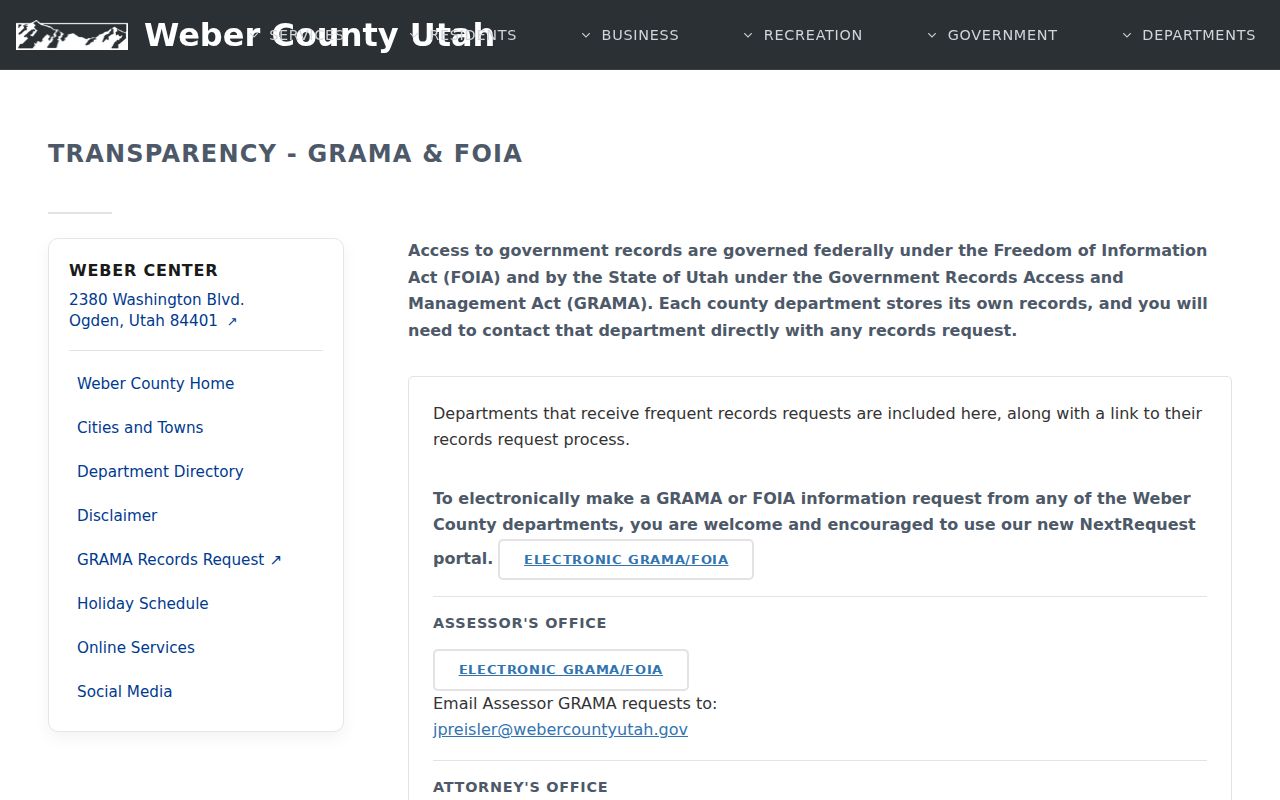
Read Weber County’s GRAMA routing page before sending a request, then cite the record type and custodian clearly.
Safe Access for Weber Searches
Utah Safe at Home matters whenever an address search could expose a person to danger. Qualifying participants receive a substitute address and mail forwarding. The substitute address can be public, while the actual home and mailing address, city, county, precinct, phone, and unique identifying information stay confidential under program rules. Enrollment uses a certified program assistant and generally lasts four years with renewal.
Voter, court, vital, law-enforcement, and recorded-property systems each carry their own privacy rules. The Utah Consumer Privacy Act gives covered consumers rights to access, delete, copy, or opt out of certain data uses, but it does not erase a public record held by Weber County or the State of Utah. Ask the custodian about withholding, correction, or protected classification.
Use records lawfully. Public access is not permission to stalk, harass, threaten, or repeatedly contact a person. Keep only the minimum detail needed for family history, civic research, property history, or a legitimate records request.
The Utah Safe at Home program is the source behind this privacy-resource capture.
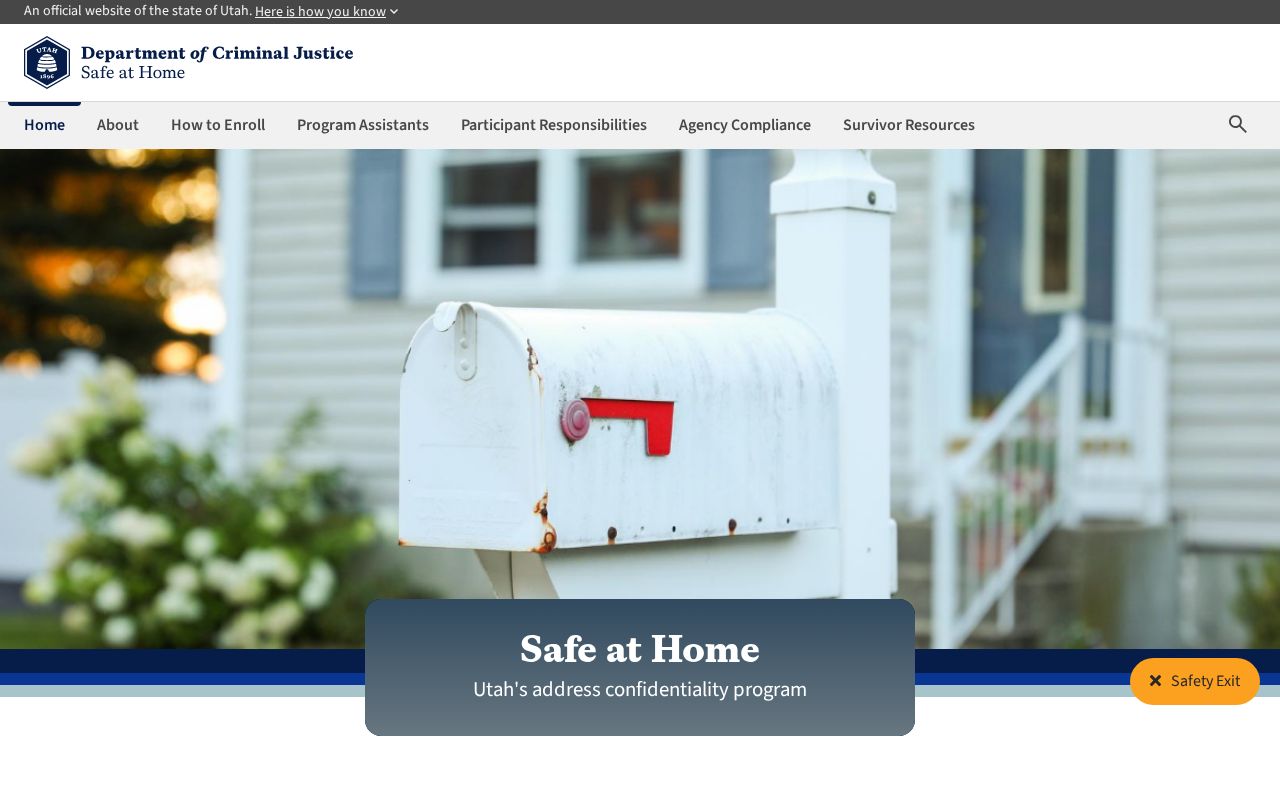
The Utah Safe at Home explanation shows the difference between a public substitute address and a confidential actual address. Do not treat an address-search result as permission to republish it.
Ogden’s Local History Network
Historical resident research in Weber County often moves through several shelves. Weber County Library holds Ogden Standard-Examiner and predecessor microfilm from 1870 to the present, with digital Ogden coverage and date gaps. Weber State Special Collections holds the Polk directory collection and university archives. Stewart Library keeps cataloged city-directory runs. Utah State Archives supplies census, birth, court, probate, land, and naturalization finding aids.
Ogden City Cemetery, established in 1851, maintains a complete interment register and map lead. The statewide burials database adds cemetery and county search modes, but every hit should be confirmed with the custodian or marker. A good source log preserves the collection, year, page, image URL, access date, and whether the result is an index, scan, or certified record.
The Weber County Library newspaper resource explains the microfilm and digital routes. It can fill a directory gap with an obituary, legal notice, business item, or street reference without turning a single search hit into a current identity claim.
More Weber County Records Links
The state privacy framework belongs beside any Weber County search. The Utah Consumer Privacy Act page explains the consumer-rights context; this screenshot is a reference point for the rule, not a substitute for the current statute.
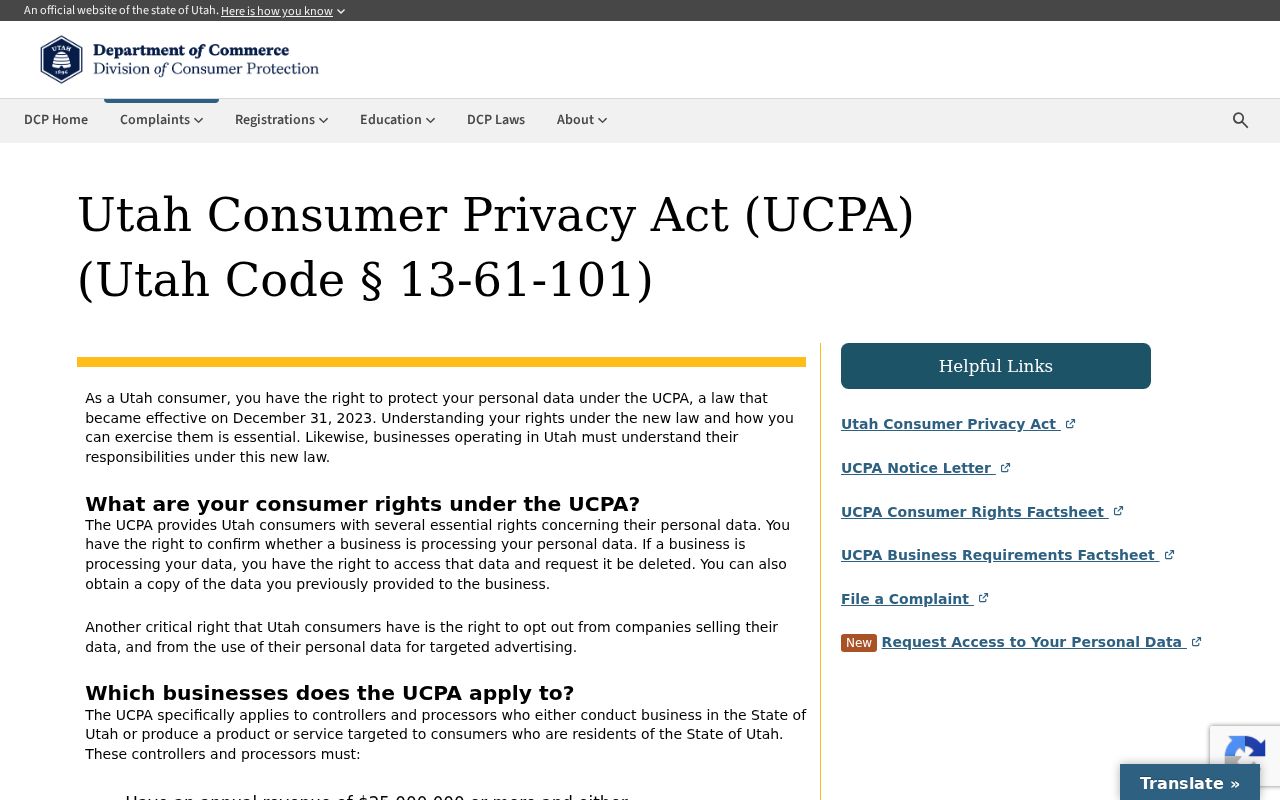
Use the current state page when a request concerns access, deletion, copies, or limits on personal-data use.
The Safe at Home enrollment route shows how a protected person begins the substitute-address process.
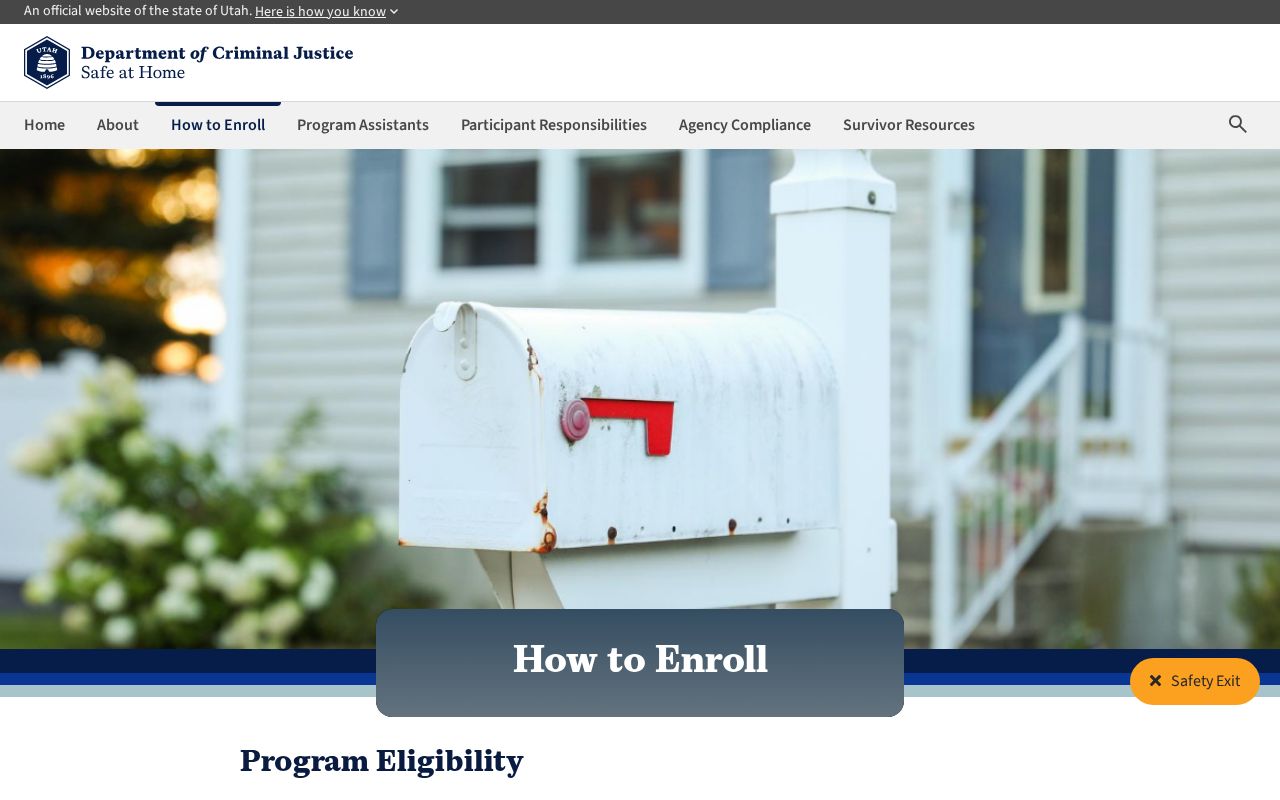
Enrollment and eligibility questions should go to program staff; do not infer a confidential address from a public result.
The Weber County government home page is a routing map when a record card changes or a department link moves.
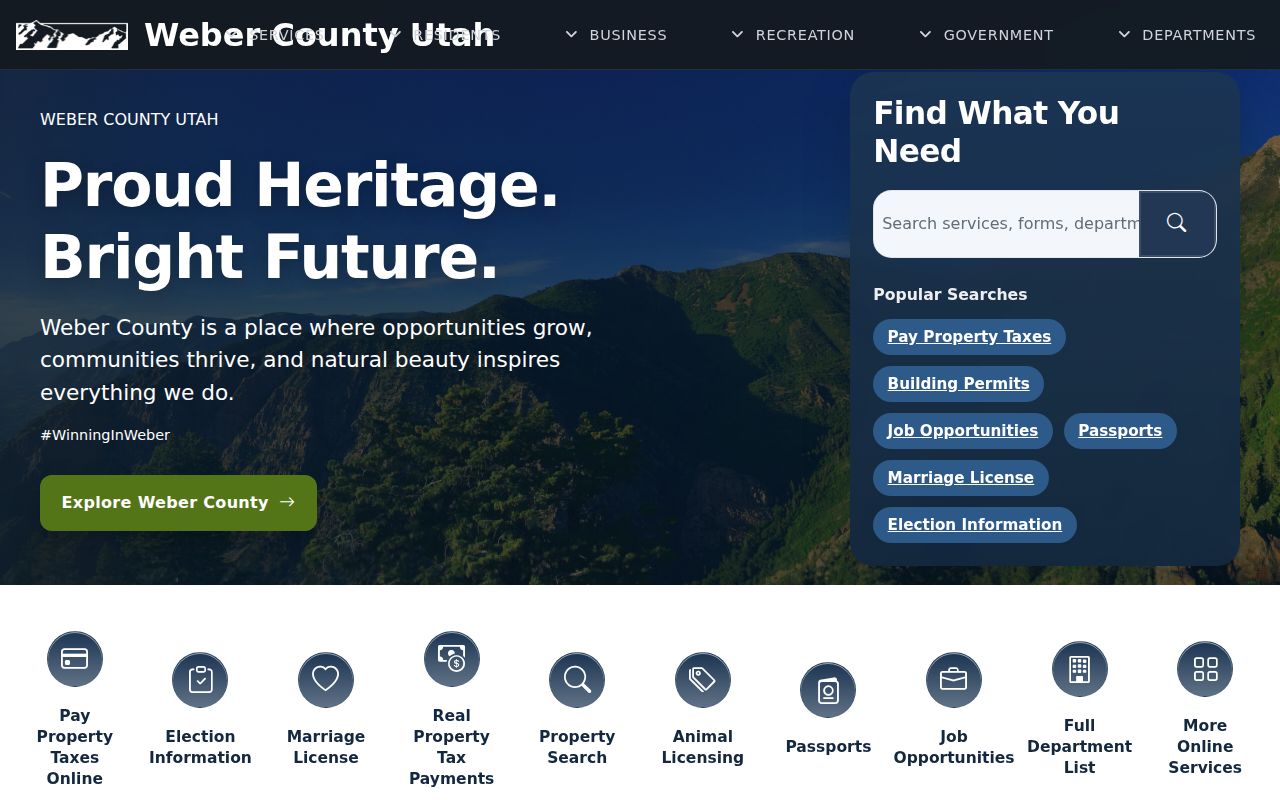
Start with the named custodian and narrow the request before relying on an older bookmark.
The Safe at Home program description gives the broader explanation of substitute addresses and mail forwarding.
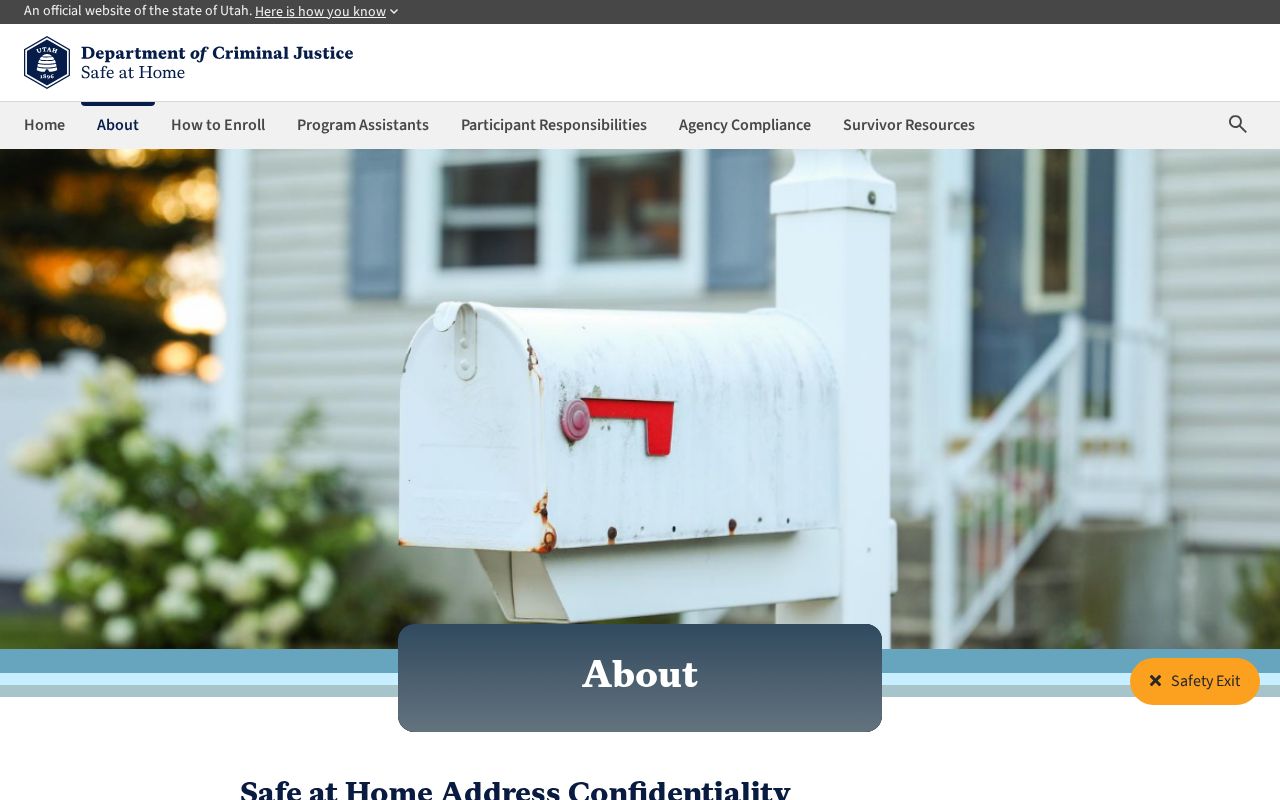
This resource reinforces the directory’s safety boundary: public-record research should not expose protected location information.
The Weber County Clerk/Auditor page identifies the office behind elections, licenses, and historical marriage records.
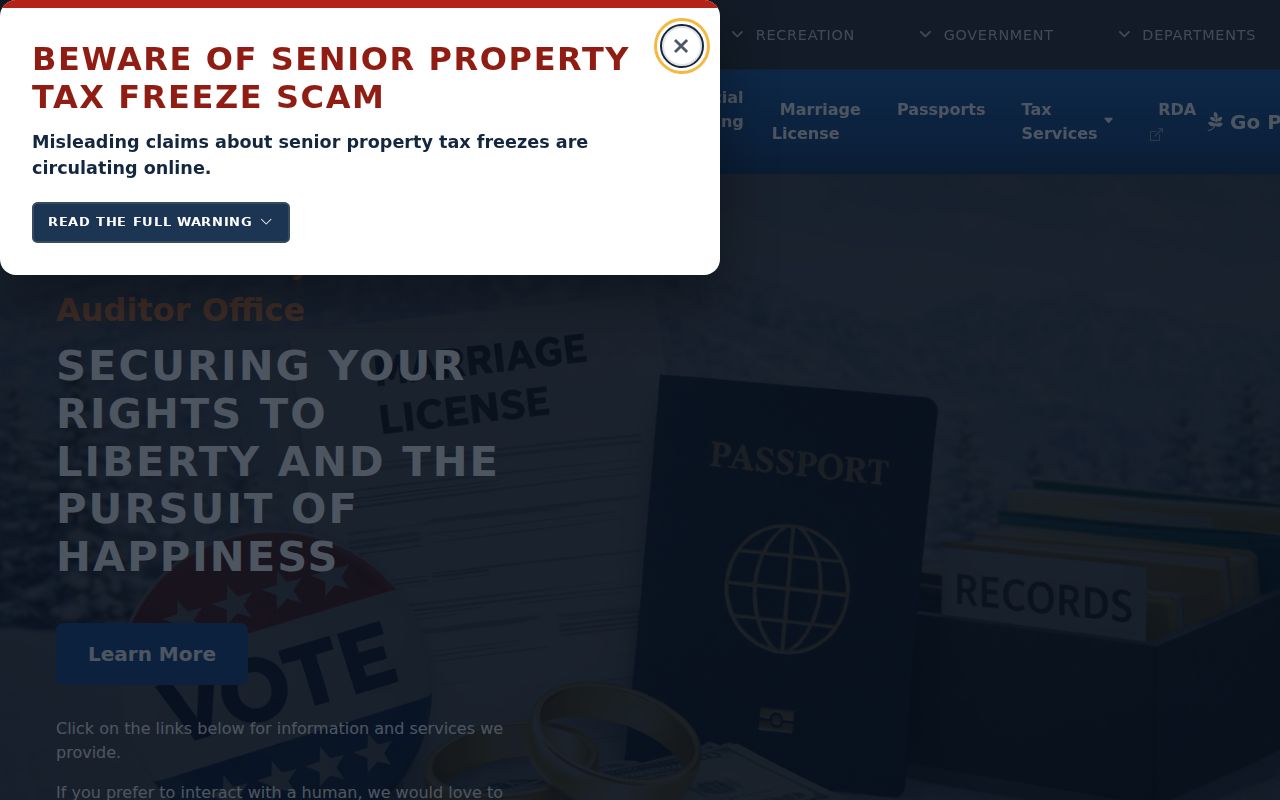
Use the office’s current instructions when a historical index needs an image, certification, or eligibility check.