
Weber County City Directory Collections
The Weber County city directory shelf is unusually broad, but it is split between Weber State Digital Collections, Stewart Library Special Collections, microfilm, and later catalog records. The main Weber State Polk collection covers 1870–1987. Stewart’s catalog adds early Ogden volumes, later city and county runs, and physical holdings that are not loaned. The years below are collection leads, not a promise that every volume has a remote page image.
| Collection | Years | Where Held | Access |
|---|---|---|---|
| Weber County Polk directories | 1870–1987 | Weber State Digital Collections / Special Collections | Digital metadata and reading-room route |
| Ogden and Weber Polk catalog runs | 1895–present, with gaps | Stewart Library Special Collections | Physical volumes; digital availability varies |
| 1918 Ogden directory | 1918 | Weber Digital Collections | 514-page public-domain scan |
| Microfilm and later runs | c. 1890–1905, c. 1980–84, 1995 and others | FamilySearch catalog and centers | Rights, account, or center access may apply |
Cataloged runs include 1929–1939, 1940–1942, Weber County 1944–1973, a North Ogden/Roy/South Ogden/Washington Terrace run from 1974–1984, 1986–2009, and 2011–present. Missing years and changes in coverage matter. A gap can reflect a missing volume, a change in place scope, or access that remains physical rather than digital.
The Weber State Polk collection is the source behind this city-directory capture.
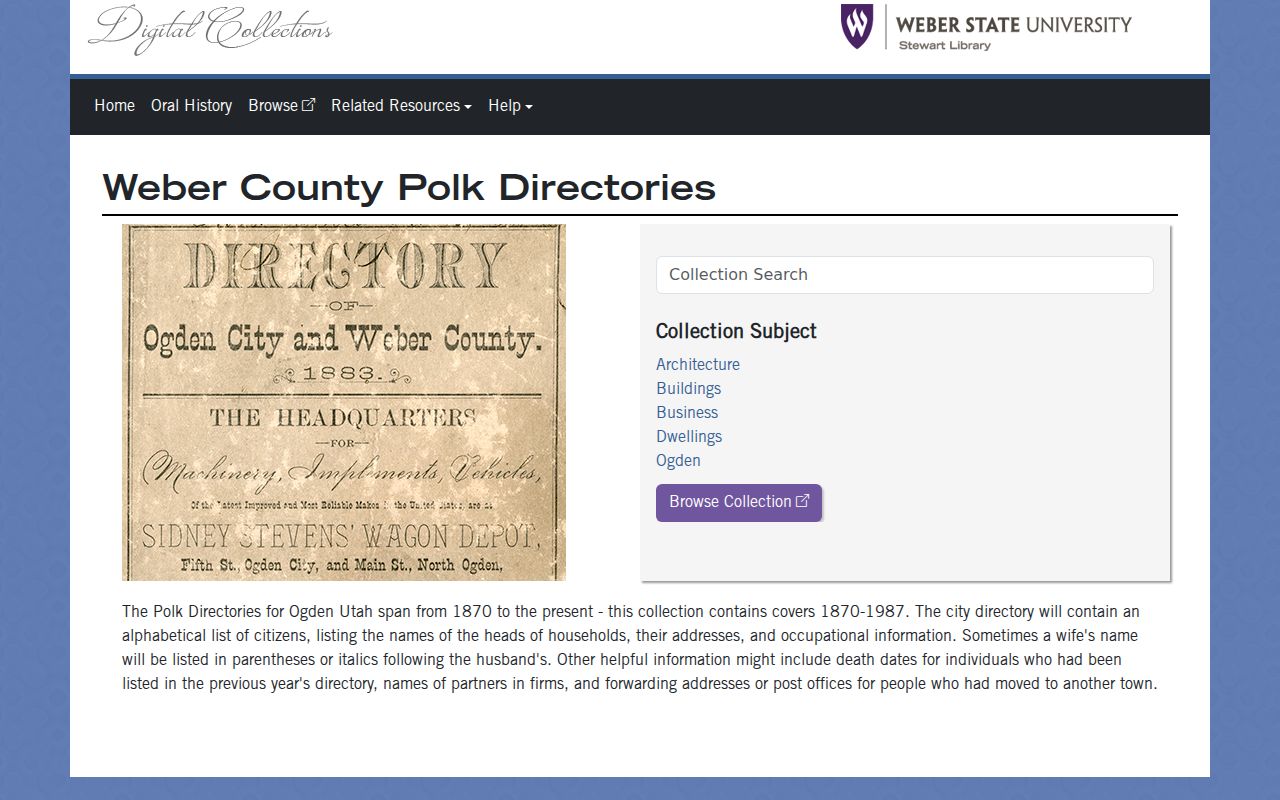
The Weber State Polk collection is the best first shelf for a dated Weber County city directory search. Preserve the collection label and year even when the scan viewer changes.
Weber County City Directory Shelves
Stewart Library lists city-directory holdings in Special Collections on the first floor, with call numbers F834.O3 A12 and 979.228 R627. The collection serves Ogden, Weber and Davis Counties, Weber State, and northern Utah. The Special Collections and University Archives contact route is scua@weber.edu, 801-626-6540 or 801-626-6545, at 3921 Central Campus Drive in Ogden. Check reading-room rules and appointments before visiting.
Weber County Library supplies another layer. Its newspaper page documents Ogden Standard-Examiner and predecessor microfilm from 1870 to the present, digital Ogden coverage from 1881–1977 in the library, and current access routes with gaps. Newspapers can confirm a move, business, obituary, legal notice, or street spelling when a city directory year is missing.
The Stewart Library catalog is the source behind this holdings capture.
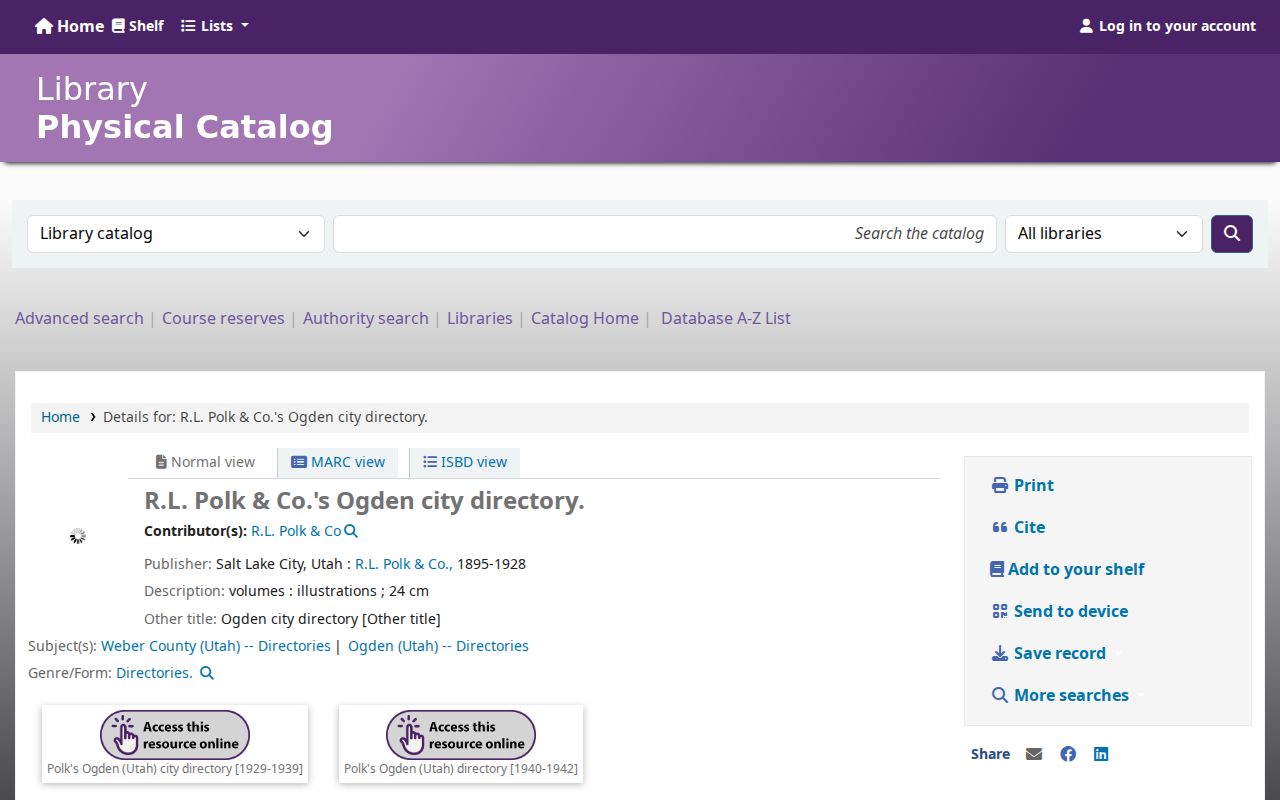
The Stewart Library catalog identifies the physical runs and Special Collections location. The Weber Library newspaper route is the practical companion when an entry needs a dated event check.
What a Weber City Directory Entry Says
A Weber County city directory entry is a compact historical record. The 1918 Ogden volume’s description names residential and business addresses, phone numbers, heads of household, occupations, spouse notation, death dates, firm partners, forwarding addresses, and post offices. The entry is a lead about a year and publication, not a current status statement.
Reading a Weber County City Directory Entry
Read the page image and the abbreviation key before interpreting a mark. Later volumes may use phone and business fields that an earlier volume lacks. The street guide can be as important as the name page when a historic address uses a directional abbreviation.
| Name | Usually surname and given name or head of household; spouse may appear in parentheses or italics. |
|---|---|
| Address | House number, street, ward, post office, or a forwarding place. |
| Occupation or business | A trade, firm, partner, or business address when supplied. |
| Family notation | Spouse, widow, death date, or other supplied household clue. |
| Phone | More common in later volumes; absence does not prove a person was absent. |
- Criss-cross section
- An address-order section, when a particular volume includes one. Weber’s public collection description does not confirm a separate reverse run.
- Householder index
- An alphabetical finding aid centered on heads of household, not every person at an address.
- Abbreviation key
- The volume’s guide to short forms for streets, occupations, family notes, or residence marks.
Use the 1918 Ogden directory scan as a concrete inspection example. OCR can misread initials and numbers, so confirm a hit on the page image.
Weber County City Directory Scans
The public digital collection and catalog are not the same thing. The Weber State collection supplies descriptive metadata and selected digital items. Stewart Library identifies physical runs. FamilySearch catalogs microfilm references that may require an account, a FamilySearch center, or rights-based access. Treat each route as a holdings lead until the viewer shows the actual page.
Remote access is useful for a name search, but a reading-room visit can answer questions about missing years, title pages, inserts, or street-order sections. Save the collection URL, image identifier, volume title, publication year, and page number. A screenshot of a search hit without the page context is weak evidence.
The FamilySearch Ogden directory catalog is the source behind this microfilm capture.
The FamilySearch Ogden directory catalog lists microfilm and digital references. Access icons and image rights should be checked at the time of search.
Weber County City Directory Timeline
Collection history gives a useful frame for a city directory search. The date milestones below come from the local catalogs and historical sources.
- 1864: The Ogden Library Association began, creating an early institutional path for local-history material.
- 1870: The Weber State Polk collection’s documented directory span begins.
- 1903: The Carnegie library building followed the earlier Ogden library association.
- 1918: The digitized Ogden volume preserves a 514-page street and household snapshot.
- 1944–1973: Stewart’s catalog identifies a Weber County run among the later volumes.
- 1974–1984: A run includes North Ogden, Roy, South Ogden, and Washington Terrace.
The dates show why the word “city” can be misleading in a county research question. Scope changes across editions, and a volume may cover Ogden alone, Weber County, or named neighboring communities.
Weber County Library History Helps
The local shelf has its own history. The Ogden Library Association began in 1864, the Carnegie building followed in 1903, county-system administration began in 1966, and the current Main Library era dates to 1968. Those milestones explain why a Weber County city directory may move between city, county, university, and state collections instead of sitting under one catalog record.
The Main Library at 2464 Jefferson Avenue in Ogden holds newspaper microfilm, a law library, research computers, and a research desk. Its documented microfilm span for the Ogden Standard-Examiner and predecessors runs from 1870 to the present. Reference staff can help identify a missing directory year, newspaper issue, genealogy database, or collection restriction.
When a volume is not online, ask for its title, publication year, publisher, call number, and reading-room route. A library database may have in-library access rules, and a FamilySearch image may depend on rights or a center. These are access details, not signs that the household record never existed.
The Weber County Library history page is the source behind this institutional-history capture.
The history of the library provides the institutional dates. Use the current Main Library hours before planning a visit.
Using Weber City Directories for Family History
Use a city directory as one dated point in a household trail. Start with a name, street, spouse, business, or post office. Search spelling variants and initials, then note every address and page. Pair the directory with a census, newspaper, deed, probate index, cemetery record, or later edition. The goal is a supported sequence, not a single dramatic match.
- Choose a target year and find the person under surname, given name, initials, spouse, or business.
- Record the exact page, address, occupation, household note, and publication details.
- Search the closest earlier and later volume, watching for a move, spouse change, forwarding address, or post office.
- Pair the directory year with the nearest census and compare the household, place, and age clues.
- Close the trail with a newspaper notice, obituary, cemetery register, probate index, or deed reference.
Disappearing from a city directory has several explanations. The person may have moved, died, changed name, used initials, been omitted from a new scope, or fallen between editions. A newspaper, cemetery, probate, or next address can help distinguish those possibilities. For modern identity verification, hand the question to the Weber County resident lookup workflow rather than treating a historical entry as current.
The Weber County Heritage Foundation is the source behind this preservation-context capture.

The Weber County Heritage Foundation adds preservation context around 25th Street, Union Station, Ogden High, Peery’s Egyptian Theater, and Ogden Cemetery. It is a history lead, not a current resident directory.
Weber County City Directory Source Captures
The Weber County Library newspaper collection is a companion when a directory year needs an obituary, move notice, or business confirmation.
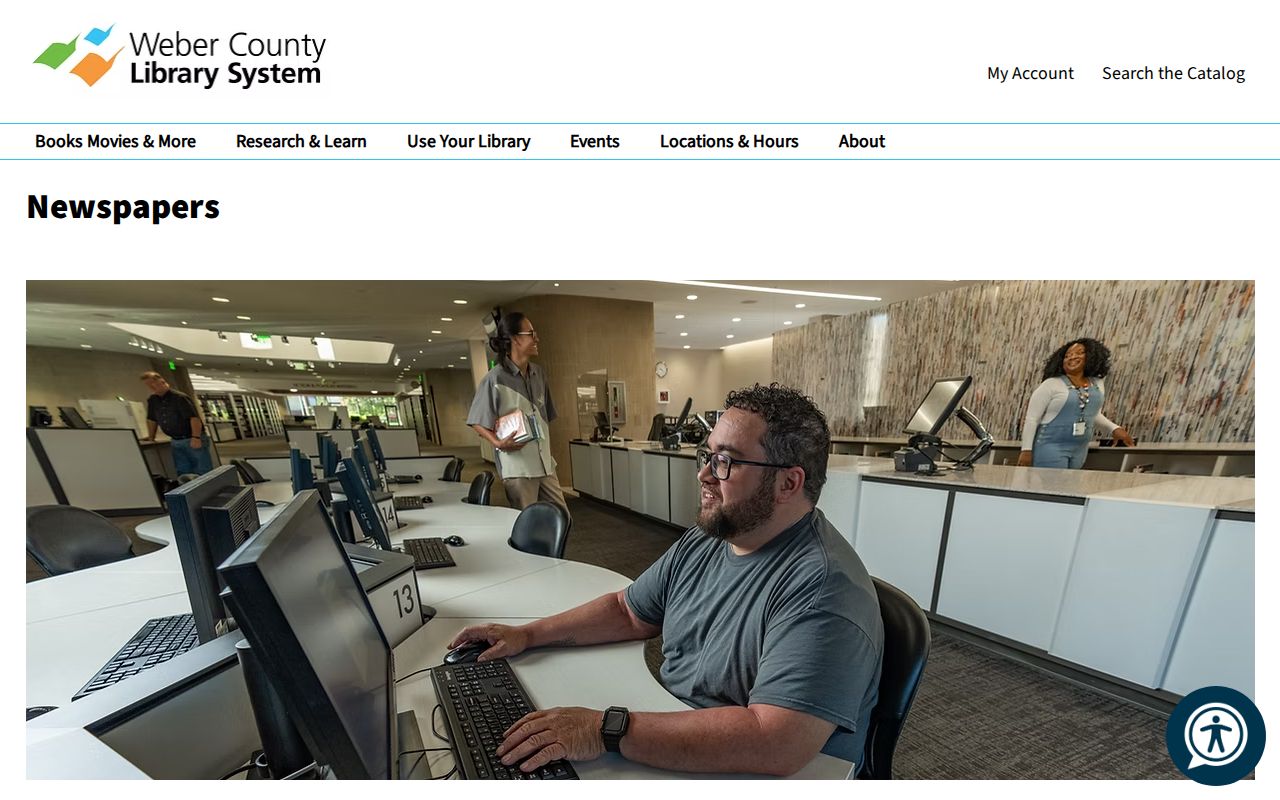
Save the issue date and page with the directory citation so a later researcher can repeat the comparison.
The Special Collections and University Archives page identifies a route for rare local volumes and university records.
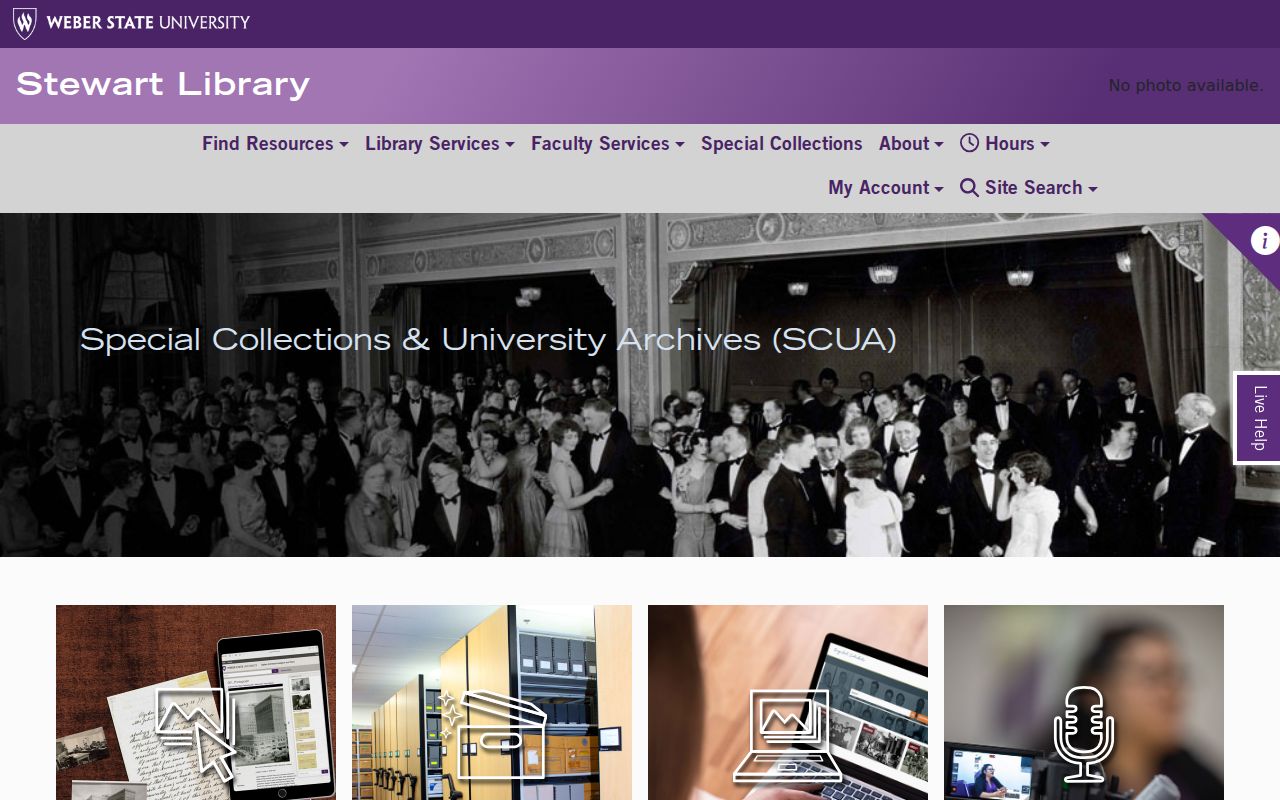
Ask for the title, year, call number, and access conditions when a catalog record has no remote scan.
The library online research page points to databases that can fill a gap between printed directory editions.
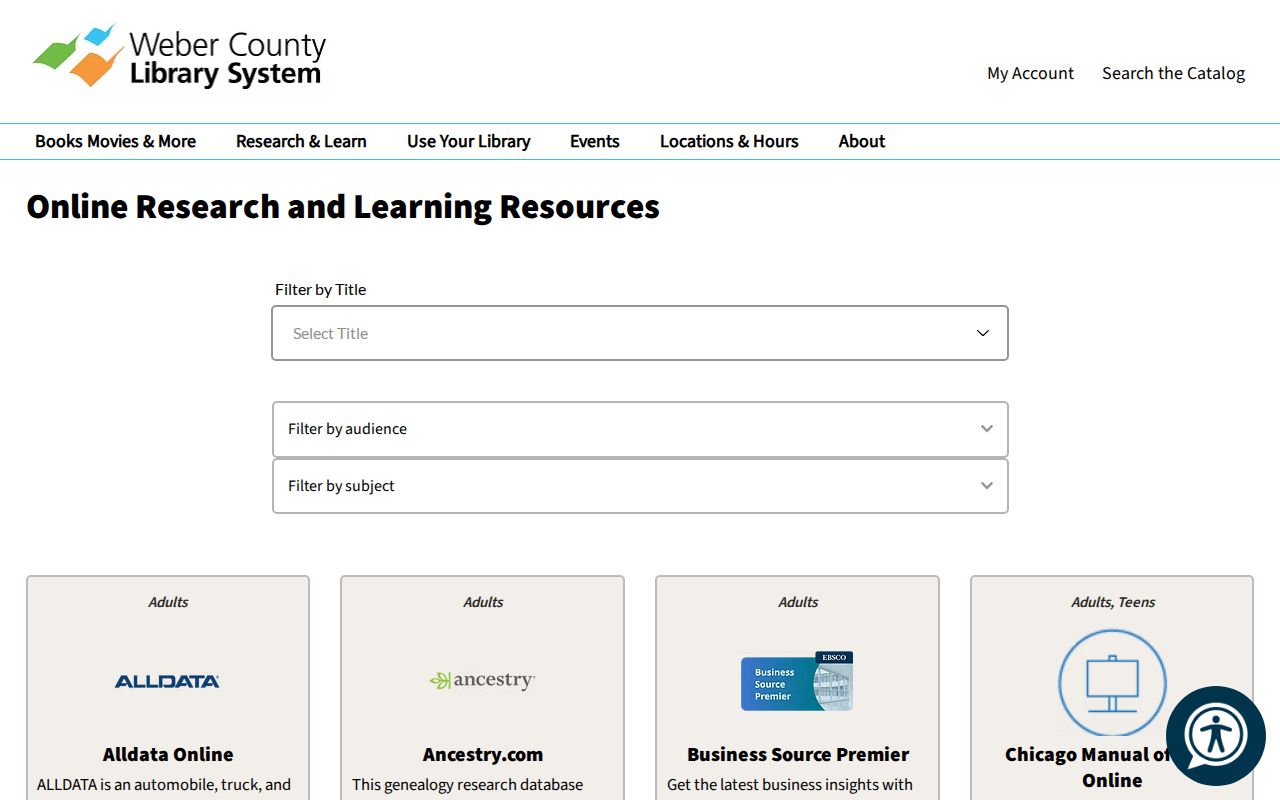
Use those tools as corroboration and keep the database name, search date, and result wording.
The Utah Museums Directory entry adds a preservation lead for local buildings and collections.
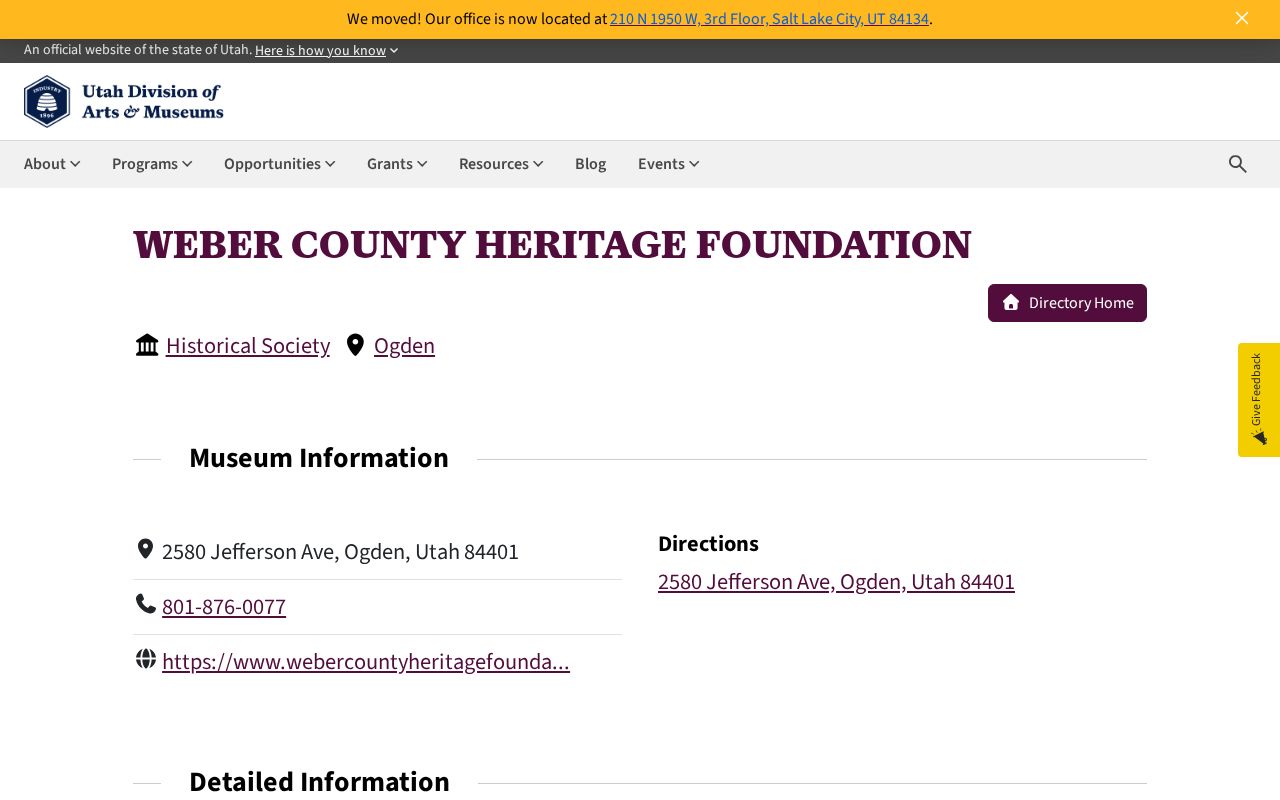
A museum or heritage collection can explain a place history without functioning as a person search.
The Ogden city directory page is a municipal routing point, not the historical Polk collection.
Its distinction from a historical volume helps prevent a current contact list from being cited as an archival directory.
The 1918 Ogden directory item gives a full-page example of the older format.
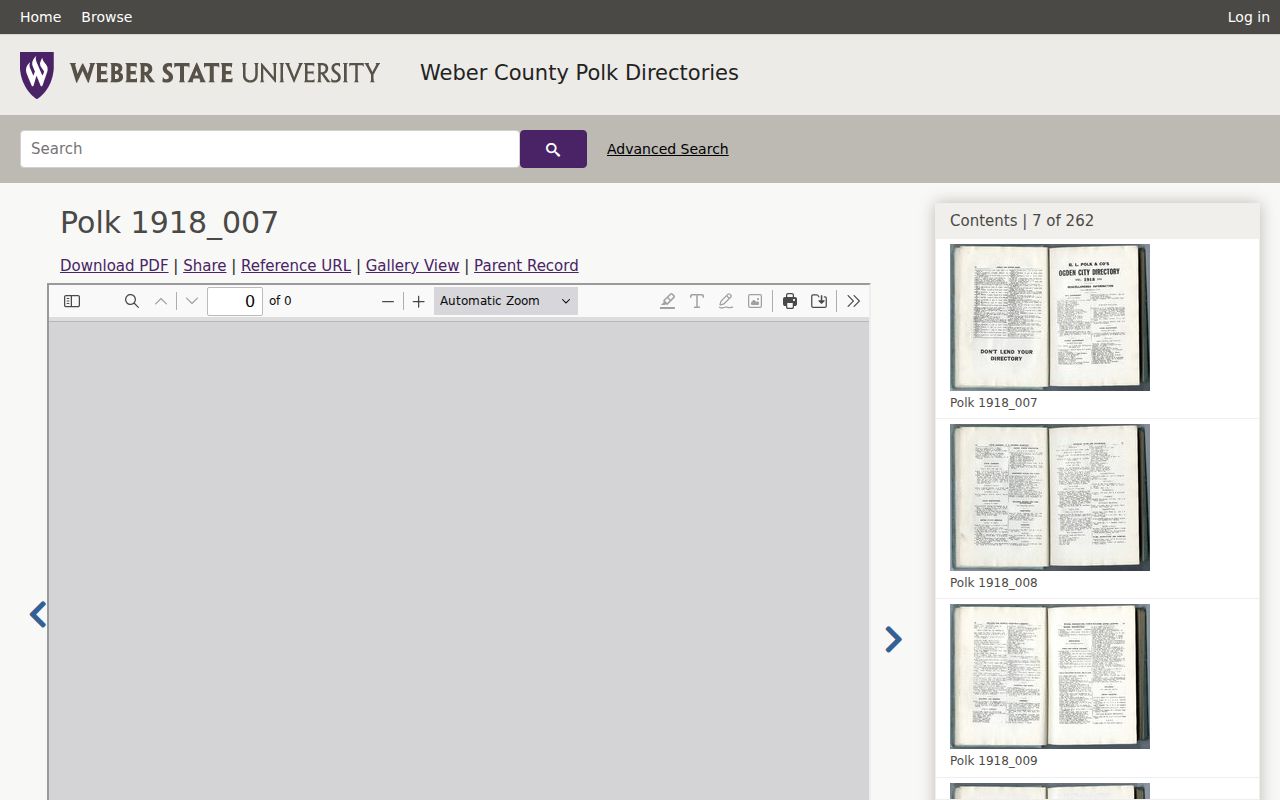
Read the page image and its surrounding index rather than relying on OCR alone.
The Main Library hours page confirms the current visit route for newspaper and local-history research.
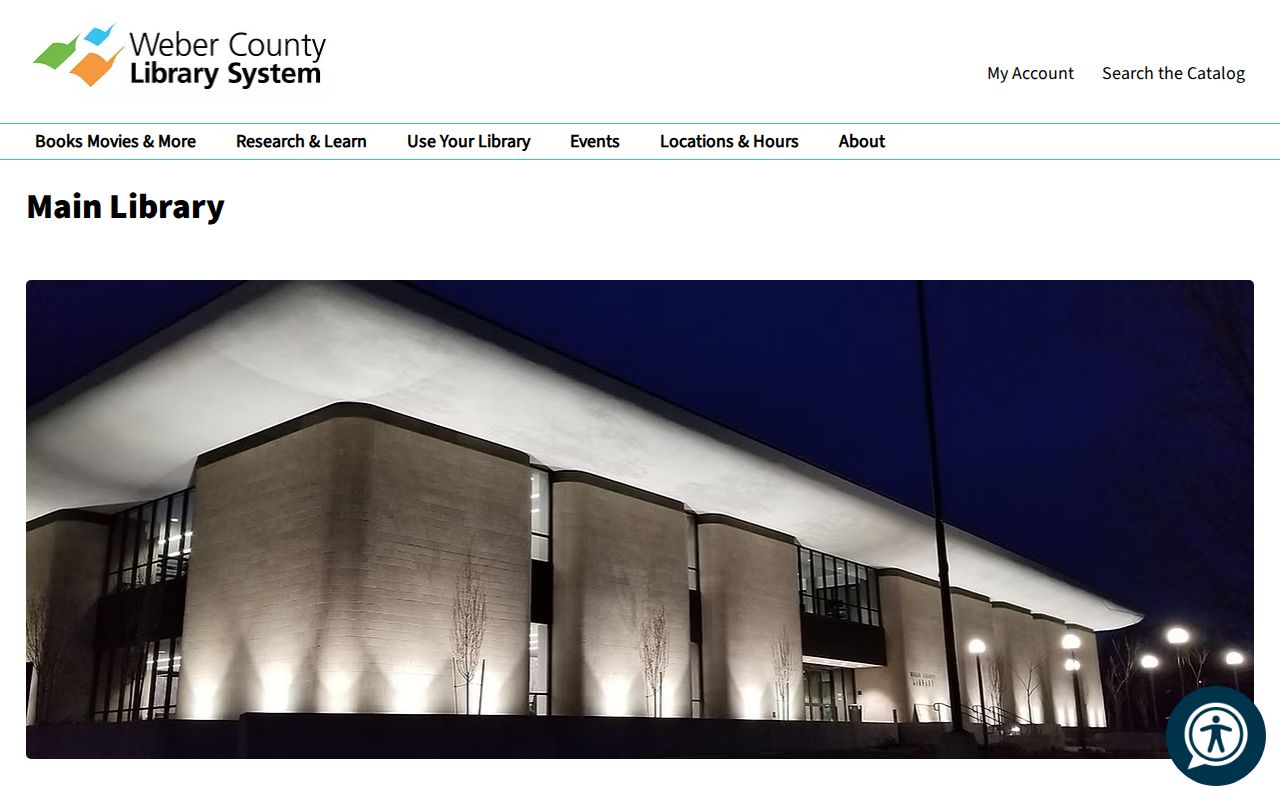
Check hours and desk availability before traveling to inspect a physical city directory.